Albania
 Argentina
 Australia
 Austria
 Belgium
 Bosnia and Herzegovina
 Brazil
 Bulgaria
 Canada
 Chile
 Colombia
 Croatia
 Czech Republic
 Denmark
 Estonia
 Finland
 France
 Germany
 Greece
 Hungary
 Ireland
 Italy
 Latvia
 Lithuania
 Luxembourg
 Mexico
 Moldova
 Montenegro
 Netherlands
 New Zealand
 North Macedonia
 Norway
 Philippines
 Poland
 Portugal
 Romania
 Serbia
 Slovakia
 Slovenia
 South Africa
 Spain
 Sweden
 Switzerland
 Turkey
 Ukraine
 United Kingdom
 United States of America


MP3 Players
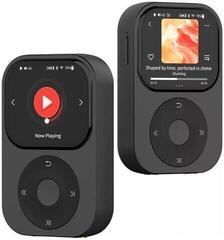
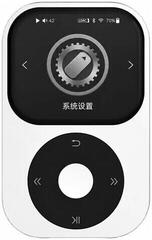
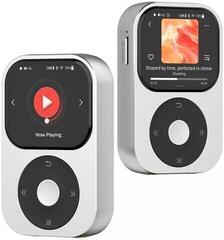
An MP3 player is a standalone device for music, audiobooks, or podcasts that doesn't put any strain on your phone while you listen. It's great for running, travelling, focused work, and for anyone who wants simple controls without messages or other distracting apps. In this category you'll find small players for everyday listening as well as more advanced portable models designed for quality headphones. When choosing, it's worth comparing the way music is stored, supported formats, outputs, and controls.
How to choose an MP3 player
Start by thinking about where and how you'll use the player. For sport, low bulk, light weight, a secure clip, and buttons you can feel without looking at the screen are key. For long trips, comfortable library browsing, plenty of room for files, and battery life that matches your listening habits make more sense. If you manage your music manually, also check how files are transferred from your computer.
Storage and managing your music library
Capacity determines how much music you can take with you without having to delete tracks regularly. Some players use only internal memory, while others can be expanded with a card; always check the specific supported capacity for the model you're considering. If you want to carry large album collections or files in higher-bitrate formats, take a look at the range of memory cards too. The clarity of your library by artist, album, and track is just as important as the storage number itself.
Formats, outputs, and headphones
MP3 is the most common format, but a player may also support other lossy or lossless files. Choose based on the music you already have, not based on the longest possible list of abbreviations. With wired headphones, check the connector type and whether the player can meet their demands; for wireless listening, the specific model needs to have the relevant connection. A higher output power or advanced DAC is most useful with demanding headphones; for everyday listening, ergonomics and reliable performance tend to matter more.
Simple player or portable Hi-Fi model?
| Type of use | What to focus on | Who it suits |
|---|---|---|
| Sport and short commutes | Small body, clip, physical buttons, easy controls | For the listener who wants minimum distraction |
| Everyday travel | Battery life, clear library, enough storage | For music, audiobooks, and podcasts throughout the day |
| Focused listening | Supported formats, quality output, suitable connectors | For users with better wired headphones |
Controls, display, and practical features
A touchscreen makes navigating a large library easier, while physical buttons are more practical in your pocket or during sport. Useful features can include an audiobook bookmark, shuffle play, radio, a key lock, and the ability to create playlists. Not every feature is available on every device, so check the specs of the specific model before buying. If you're looking for a wider selection of portable music sources including other formats, also browse pocket music players.
Player for sport, travel, or home listening
For running and working out
When you're on the move, secure mounting and simple controls are more important than a large screen. The volume, pause, and skip buttons should be distinguishable by touch. Think about where you'll clip the player and how you'll route the headphone cable if you're not using a wireless model. Take any declared sweat or water resistance only in the scope stated for the specific device; a standard clip doesn't automatically mean sports durability.
For travel and commuting
On the bus or train, you'll appreciate quickly resuming the last track, a clear battery indicator, and a readable menu. If you switch between music and audiobooks, check whether the player saves the position separately and how it handles long files. With a large library, sorting by folder and file tags is useful. Also think about whether you want to carry one charging cable for multiple devices.
For better headphones and a home setup
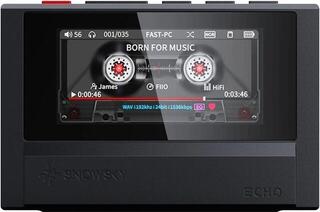
A more advanced portable player makes sense if you want to keep your music library separate from your phone and use headphones that need a suitable output. Before buying, compare the connector type, volume control, and the headphone manufacturer's recommendations. Terms like Hi-Res or lossless playback don't by themselves guarantee that you'll be happy with the result. The whole chain matters – from the quality file, through the player, to the headphones.
Music, audiobooks, and podcasts have different needs
With music, what matters is support for your library, album organisation, and playlists. An audiobook needs reliable position memory, sensible navigation through a long file, and a convenient pause. With podcasts, the key question may be how you transfer them to the device and whether you need to download them on your computer first. A player without an internet connection can be a deliberate advantage if you want to listen without notifications, but it requires more regular file management.
How to prepare your music library
Before copying for the first time, standardise artist names, album names, and track numbers. Players may display data from file tags or just folders, so consistent naming helps a lot. An album cover with disproportionate dimensions can unnecessarily slow down a simple device, while missing tags will mix up tracks in the overview. Transfer a small sample first, check the order, and only then copy your whole collection.
If the device uses a removable card, safely eject it from your computer and check the recommended file system before using it for the first time. Don't remove the card while writing or updating the library. Keep a backup of your music outside the player too – a portable device shouldn't be the only place where your recordings or purchased files are stored.
MP3 player vs phone
| Consideration | Standalone player | Phone |
|---|---|---|
| Distraction | Listening without messages and social apps | Music and communication in one device |
| Content management | Often manual copying of your own files | Convenient streaming apps |
| Battery | Doesn't drain your phone battery while listening | No need to charge a second device |
| Headphones | Choice based on the player's available outputs | Choice limited by the phone's connector and support |
A standalone player is especially suitable when you want your own files always with you, want to save your phone's battery, or want to listen without interruptions. A phone is more convenient if streaming dominates and you don't want to manage an extra library. Decide based on your habits, not on the assumption that one solution is automatically better.
What to check before buying
- whether the player supports the formats in your music library,
- how much storage it offers and whether it can be expanded,
- what headphones and connectors you want to use with it,
- whether you prefer touch or button controls,
- how music is transferred and how the device is charged.
The best choice doesn't have to have the most features. For running, a small player with simple buttons may be more suitable, while for a home collection and quality headphones, a model with better album navigation and appropriate outputs makes more sense.