Albania
 Argentina
 Australia
 Austria
 Belgium
 Bosnia and Herzegovina
 Brazil
 Bulgaria
 Canada
 Chile
 Colombia
 Croatia
 Czech Republic
 Denmark
 Estonia
 Finland
 France
 Germany
 Greece
 Hungary
 Ireland
 Italy
 Latvia
 Lithuania
 Luxembourg
 Mexico
 Moldova
 Montenegro
 Netherlands
 New Zealand
 North Macedonia
 Norway
 Philippines
 Poland
 Portugal
 Romania
 Serbia
 Slovakia
 Slovenia
 South Africa
 Spain
 Sweden
 Switzerland
 Turkey
 Ukraine
 United Kingdom
 United States of America



Bags and Cases for Mixers
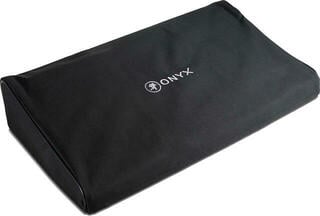
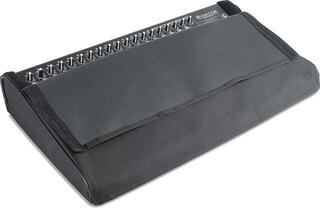
A bag or case protects a mixing console when it is transported between a rehearsal room, studio and performance venue. Choose the right type according to the console's exact dimensions, the required degree of protection, weight, and whether you want to remove the equipment while working. A soft bag saves weight, a hard case separates sensitive controls from the surrounding cargo more effectively, and a workstation case can remain part of the system. None of these options, however, replaces careful handling or protection from conditions for which it is not expressly designed.
Measure the mixing console first
The nominal size or number of channels is not enough. Measure the width, depth and height, including connectors, feet, side rails and protruding parts. For a digital console, remember the screen or mount; for an analogue console, include the tallest knobs and faders. The case manufacturer may specify internal or external dimensions; when comparing, check which measurement you are using.
A small amount of clearance makes insertion easier and provides room for padding, but too much space allows the equipment to move. The console must not rest with its weight on the faders, encoders or display. If the case has contoured foam, check that it supports rigid parts of the enclosure. Before buying a universal case, compare it with the dimensional drawing of your specific mixing console.
Soft bag, hard case or workstation design
| Type | Best suited to | Compromise |
|---|---|---|
| Padded bag | Frequent carrying by hand and separate storage in a vehicle | Less protection against pressure and hard impacts |
| Rigid moulded case | Transport with other equipment and protection of controls | Higher weight and exacting internal dimension requirements |
| Flight case with metal edging | Repeated loading, stacking within permitted limits and stage use | Greater bulk; hardware, castors and handles must be checked |
| Workstation case | Operating the console directly in the lower section of the case | Ventilation and access to all connectors must be provided |
If you only move the mixing console between a shelf and a desk, a lightweight cover protecting against dust and minor scratches may be more practical. A rigid shell makes more sense when it is transported together with speakers, stands and cables. Treat claims of water or weather resistance strictly according to the manufacturer's documentation; zips, ventilation openings and cable access points may affect protection.
Details that matter during loading and connection
Handles and castors
A handle should remain accessible even when the case is placed among other items of equipment. With a heavier console, multiple handholds allow two people to lift it safely. Castors make movement over a level surface easier, but add weight and may get in the way on stairs. Suitable castors help on a ramp, while a brake is useful when stationary on a slope; also check whether they can be replaced and whether the hardware protrudes beyond the outline of the case.
Lid, hinges and latches
A removable lid saves space during operation. A hinged lid cannot be misplaced, but it must open without colliding with cables or a wall. The latches must not press against the console, and their position should not snag clothing. For a workstation case, check whether the full control surface is visible when open and whether you can connect the power, inputs and outputs without forcing anything.
Accessory space
A separate pocket or compartment is useful for the power supply, but a heavy adapter must not strike the mixing console during transport. Store cables so that the connectors do not press against the faders. If you also want to carry a router, tablet or several power accessories, calculate their weight and check ventilation. A separate bag is sometimes safer than an overfilled main compartment.
Choosing by working scenario
- Home and project studio: prioritise dust protection, convenient storage and easy access without an unnecessarily large case.
- Rehearsal room: consider the durability of the base, as the bag or case is often moved a short distance and set down on different surfaces.
- Live production: rigid edges, recessed hardware, clear labelling and handling by several people are important.
- Console operated in the case: plan cable access, ventilation, work-surface angle and connector clearance before ordering.
The differences between analogue mixing consoles and digital mixing consoles also affect the shape of the protection required. A digital model may need clearance around the display and network connectors, while an analogue console may have a longer control surface with more controls. This is a general guide; the dimensions and layout of the specific equipment are always decisive.
How to pack and transport without unnecessary risk
- Disconnect the power and signal cables and allow the equipment to cool if it became warm during use.
- Retract or secure moving parts only in the manner approved by the manufacturer; do not stick tape to the controls.
- Check that no loose adapter, connector or tool remains in the space above the console.
- Close all latches and lift the case by its designated handles, not by the telescopic castor handle unless it is rated for lifting.
- Prevent the load from shifting in the vehicle, and do not place more weight on the case than its construction permits.
After returning, remove moisture and dirt before closing the bag or case for an extended period. Allow soft materials to dry according to the care instructions, inspect the metal hardware, and replace damaged foam before it stops securing the console. Regularly inspect the inside of the case as well: a loose screw or sharp edge can damage the equipment even if the outer shell appears intact.
When you need to protect the entire audio system
A mixing console rarely travels alone. In the audio equipment bags, cases and accessories category, you can coordinate protection for other equipment without placing it alongside the sensitive console. Label each item and sort cables by use; you will then avoid having to open every case when unloading.
Decide according to the route you actually take with the console, not an extreme transport scenario that may never occur. If you carry the console upstairs by yourself, weight and grip may matter more than a heavy-duty construction. If a team regularly loads it with other equipment, a rigid case and well-designed hardware have greater value. First measure the console, then address how it will be secured and how loose accessories will be stored separately. A model-series name without checking the internal dimensions is not enough.